Can Vehicle Recovery Save Your Car After a Ditch in Azle, TX?
Vehicle recovery in Azle, TX uses winch systems and rigging techniques to pull your car safely from ditches without causing additional damage.
What Makes Vehicle Recovery Different from Standard Towing?
Vehicle recovery involves extracting a car from a position where it cannot be driven or easily loaded, which requires different equipment than a routine tow.
Standard towing typically means hooking up a vehicle that is parked or stalled on a flat surface and transporting it to another location. Recovery is more complex. When your car slides into a ditch, rolls down an embankment, or gets stuck in mud along a creek bed, the operator needs winch cables, snatch blocks, and sometimes anchor points to pull the vehicle back to stable ground. The angle of the pull, the weight of the vehicle, and the condition of the terrain all factor into how the crew approaches the job.
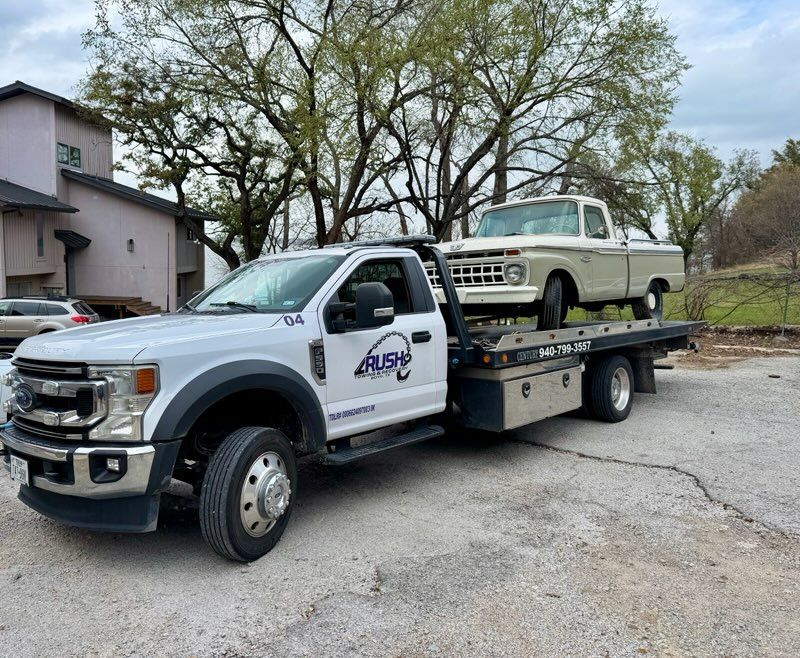
Rush Towing and Recovery sends licensed operators with clean, well-maintained trucks equipped for these situations. The crew assesses the scene before attaching any cables to make sure the pull direction will not twist the frame or damage undercarriage components. If you need vehicle recovery services in Azle, TX, the operator will walk you through the extraction plan before starting any work.
Can a Ditch Accident Cause Hidden Damage to Your Vehicle?
Yes, even a low-speed slide into a ditch can bend suspension components, crack oil pans, or misalign your wheels without any visible body damage.
The underside of your car absorbs most of the impact when it drops into a ditch or slides across uneven ground. Control arms, tie rods, and sway bar links are especially vulnerable because they sit low and connect to the wheels. A hard enough hit can also crack the transmission housing or puncture the oil pan on rocks hidden beneath the grass. These problems may not show up until you try to drive and notice pulling, vibration, or warning lights on the dashboard.
This is one reason professional recovery matters. An experienced operator knows how to lift and position the vehicle to avoid making hidden damage worse. Dragging a car out with a chain attached to a pickup truck might seem like a quick fix, but it can bend the frame or tear off bumper reinforcements. Professional extraction preserves the vehicle in its current condition so a mechanic can accurately diagnose what needs repair. If your car also needs transport after extraction, light duty towing in Azle can move it safely to the shop on a flatbed.
Should You Try to Drive Out of a Ditch on Your Own?
Attempting to power out of a ditch often digs the tires deeper and can overheat your transmission or damage drivetrain parts.
It is tempting to floor the gas when your car is stuck, but spinning wheels on soft ground just creates ruts that make recovery harder. Front-wheel-drive vehicles are especially prone to digging in because the weight of the engine pushes the drive wheels down into the soil. All-wheel-drive systems can overheat quickly when one or more wheels lose traction and the differentials work overtime to compensate.
The safest approach is to put the vehicle in park, turn on your hazard lights, and move to a safe distance from the road. If the ditch is near a busy stretch of road, staying inside the car with your seatbelt on may be safer until help arrives. A recovery operator can typically have your vehicle extracted and back on solid ground within thirty to forty-five minutes depending on the complexity of the situation.
Does Azle's Rolling Terrain Make Ditch Accidents More Common?
The hilly geography and winding rural roads around Azle create conditions where vehicles slide off pavement more frequently than on flat terrain.
Azle sits in the transition zone between the Western Cross Timbers and the open prairie to the west, which means the landscape features rolling hills, sharp curves, and elevation changes that catch drivers off guard. Farm-to-market roads in this area often lack guardrails and have narrow shoulders that drop off steeply into drainage ditches. After a rain event, these shoulders become soft and can give way under the weight of a vehicle that drifts even slightly off the pavement edge.
Creek crossings and low-water areas near Eagle Mountain Lake add another layer of risk. Rising water during spring storms can wash across roads and push vehicles sideways into ditches or culverts. The combination of terrain, weather, and rural road design means Azle area drivers benefit from knowing a reliable recovery service before they ever need one. Being prepared with that information turns a stressful situation into a manageable one.